
Getting people to notice your business online is no longer enough.
A post may receive thousands of views, an advert may generate hundreds of clicks, and your website may attract a steady stream of visitors. But if those interactions do not lead to enquiries, purchases, bookings, or other meaningful actions, what are they really worth?
This is where a Performance Marketing Agency can make a significant difference.
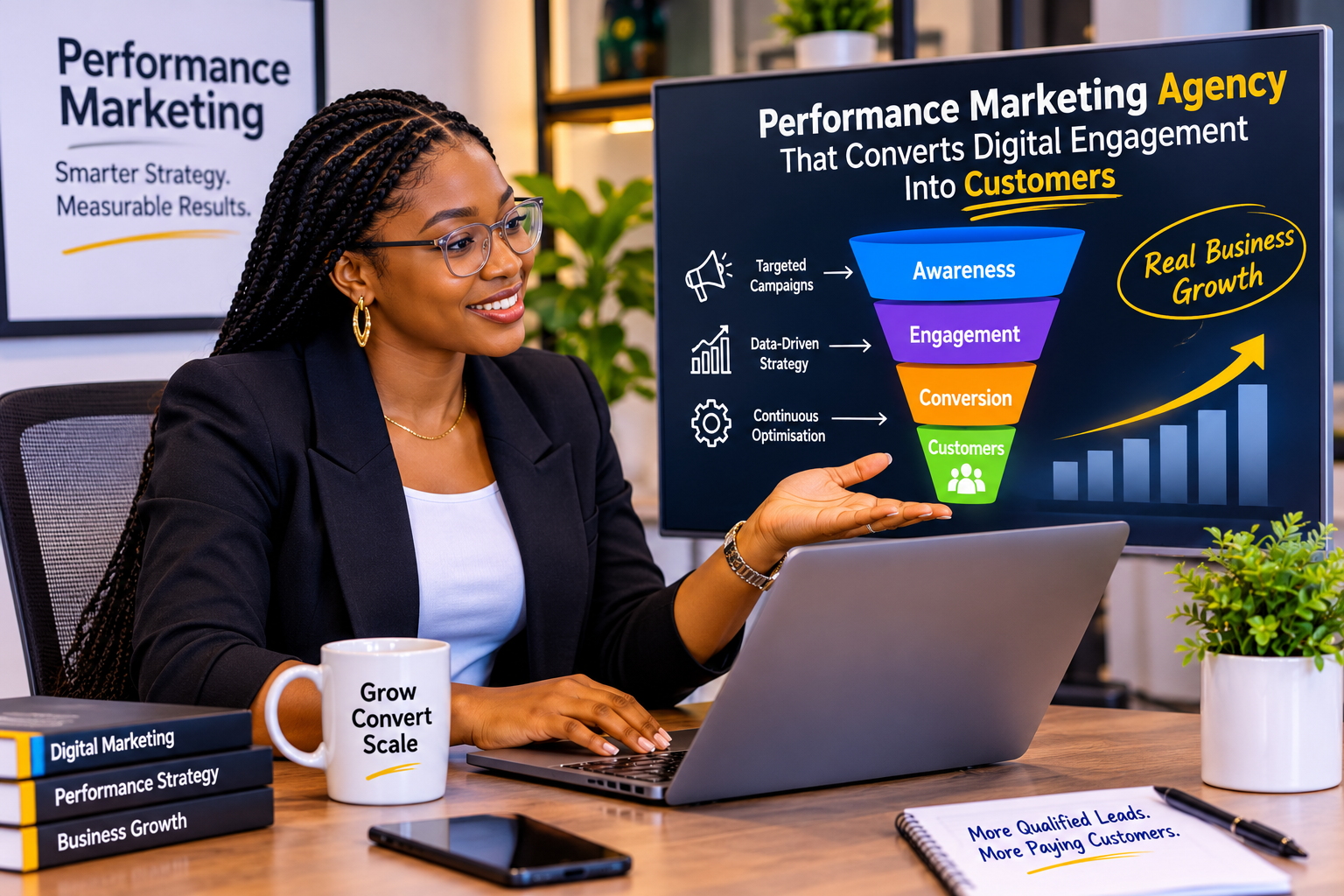
Unlike marketing approaches that focus mainly on visibility, performance marketing connects advertising activities to measurable business outcomes. The goal is not simply to generate attention but to turn digital engagement into actions that contribute to business growth.
But how does a business move someone from simply clicking an advert to actually becoming a customer? The answer lies in understanding what happens after the click.
When Clicks Do Not Become Customers
One of the biggest challenges businesses face with digital advertising is confusing activity with results.
A campaign can look successful on the surface because it has:
-
High impressions
-
Thousands of clicks
-
Strong social media engagement
-
Growing website traffic
-
Increased followers
Yet, the business may still struggle to generate sales.
Why?
Because a click is only the beginning of the customer’s journey.
Someone may click your advert because the headline caught their attention, but that does not necessarily mean they are ready to buy. They may visit your website, compare your offer with competitors, leave, and never return.
This is why successful digital marketing requires more than getting people to click.
It requires understanding who is clicking, why they are clicking, what happens after the click, and what encourages them to take the next step.
What Does a Performance Marketing Agency Actually Do?
A Performance Marketing Agency focuses on creating and managing marketing campaigns around measurable objectives.
These objectives could include generating leads, increasing sales, driving app downloads, getting more enquiries, or improving customer acquisition.
Rather than asking only, “How many people saw the advert?” performance marketing asks more valuable questions:
How many people took action?
How much did it cost to acquire them?
Which campaign produced the best results?
Which audience converted the most?
This approach allows businesses to use real performance data to understand what is working and make adjustments where necessary.
Depending on the business and campaign objectives, performance marketing can involve paid search, social media advertising, display advertising, retargeting, landing pages, conversion optimisation, and data analysis.
5 Ways Performance Marketing Can Turn Engagement Into Customers
1. It Targets People With Intent
Not every person online is your customer.
A successful campaign begins by identifying the people most likely to need your product or service.
For example, a company selling accounting software should not simply advertise to “everyone who owns a business.” It could target businesses experiencing specific accounting challenges or decision-makers searching for better financial management solutions.
The more relevant the audience, the greater the possibility of meaningful engagement.
A Performance Marketing Agency can use audience research, behavioural data, search intent, and campaign insights to help businesses reach people who are more likely to take action.
2. It Moves Beyond Vanity Metrics
Likes and impressions can be useful indicators, but they do not always tell the full story.
Imagine two advertising campaigns.
Campaign A generates 50,000 impressions and 2,000 clicks but only five customers.
Campaign B generates 15,000 impressions and 500 clicks but produces 30 customers.
Which campaign would you rather invest in?
Campaign B.
This is why performance marketing pays closer attention to metrics such as conversion rate, cost per acquisition, return on advertising spend, qualified leads, and revenue generated.
The focus shifts from “How many people saw us?” to “What did our marketing achieve?”
3. It Optimises Campaigns Using Real Data
One of the biggest advantages of digital marketing is the ability to learn from campaign performance.
If an advert is receiving clicks but generating few conversions, something may be wrong.
Perhaps the audience is not properly targeted.
Maybe the offer is unclear.
The landing page could be difficult to navigate.
Or the advert may be promising something the website does not immediately deliver.
Instead of simply continuing to spend money, performance marketing allows businesses to identify these problems and test different approaches.
This could involve changing the advert copy, adjusting the audience, testing different creatives, improving the landing page, or changing the call-to-action.
Small improvements can make a significant difference when applied consistently.
4. It Connects Advertising With the Customer Journey
Customers rarely see one advert and immediately make a purchase.
A potential customer might first discover your brand through Instagram, visit your website a few days later, read a blog post, see another advert, and eventually make an enquiry.
This is why businesses need to think beyond individual campaigns and consider the entire customer journey.
A Performance Marketing Agency can help businesses build campaigns that support different stages of the buying process.
For example:
Awareness: Introduce the brand to potential customers.
Interest: Provide useful information that addresses their needs.
Consideration: Demonstrate why your product or service is worth choosing.
Conversion: Encourage the customer to purchase, book, enquire, or sign up.
Retention: Continue engaging customers after the initial conversion.
When these stages work together, marketing becomes a journey rather than a collection of disconnected adverts.
5. It Helps Businesses Spend Marketing Budgets More Intelligently
Marketing budgets are not unlimited.
Businesses need to know where their money is going and whether it is producing meaningful results.
Performance marketing provides data that can help businesses identify which channels, audiences, messages, and campaigns are producing the strongest outcomes.
If one campaign consistently produces high-quality leads while another generates traffic without conversions, the business has useful information for deciding where to allocate future resources.
This does not mean abandoning every campaign that performs poorly immediately. It means using evidence to understand what needs improvement.
What Makes a Performance Marketing Campaign Successful?
Having a large advertising budget does not automatically guarantee success.
A strong performance marketing campaign usually depends on several factors working together.
The Right Audience
You need to know who you are trying to reach and what matters to them.
A Strong Offer
People need a reason to take action. Your offer should clearly communicate the value they will receive.
Compelling Creative
Your advert needs to capture attention quickly while communicating a message that is relevant to the audience.
A Clear Call-to-Action
Tell people what you want them to do next: buy, book, enquire, download, register, or learn more.
A Strong Landing Experience
Getting someone to click is pointless if the page they reach is confusing, slow, irrelevant, or difficult to navigate.
Continuous Optimisation
The first version of a campaign is rarely perfect. Testing and improving different elements can help increase performance over time.
How Can Businesses Know If Their Marketing Is Working?
Before launching a campaign, businesses should establish clear objectives.
For example, instead of saying:
“We want more engagement.”
A stronger objective would be:
“We want to generate 200 qualified leads within three months while maintaining a sustainable cost per lead.”
This creates something that can actually be measured.
Businesses can then track metrics such as:
-
Conversion rate
-
Cost per lead
-
Cost per acquisition
-
Return on advertising spend
-
Customer acquisition cost
-
Qualified leads
-
Sales generated
-
Revenue attributed to campaigns
These numbers provide a clearer picture of whether marketing activity is contributing to business objectives.
When Should You Consider Working With a Performance Marketing Agency?
You may benefit from professional performance marketing support when your business is already investing in digital advertising but struggling to achieve consistent results.
It can also be useful when:
-
Your advertising costs are increasing.
-
You are generating traffic but not enough conversions.
-
You do not know which campaigns are actually profitable.
-
Your internal team lacks performance marketing expertise.
-
You want to scale successful campaigns.
-
You need better tracking and reporting.
-
Your business is entering a new market.
The right agency should not simply promise more clicks. It should understand your business objectives and develop campaigns around measurable outcomes.
Conclusion
Digital engagement is valuable, but engagement alone does not build a sustainable business.
The real opportunity lies in turning attention into action and action into measurable business results.
A Performance Marketing Agency can help businesses achieve this by combining audience targeting, compelling campaigns, conversion optimisation, data analysis, and continuous testing.
The goal is not to chase every click or every impression. It is to understand which digital activities actually move customers closer to making a decision.
Because ultimately, the most successful marketing campaign is not necessarily the one that gets the most attention.
It is the one that turns the right attention into real customers and measurable growth.