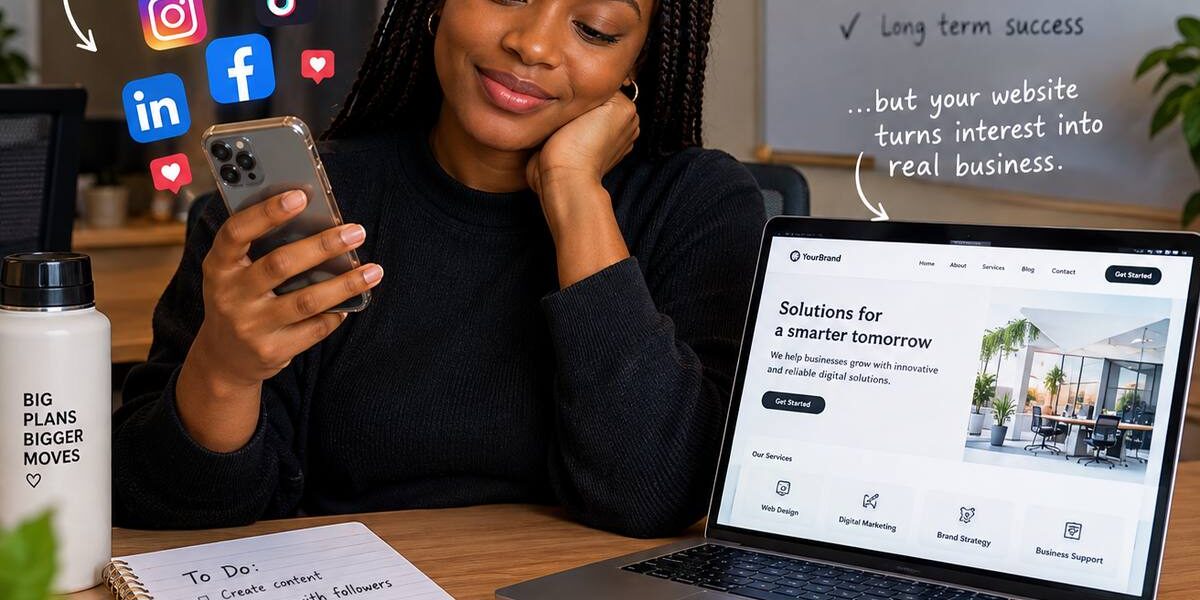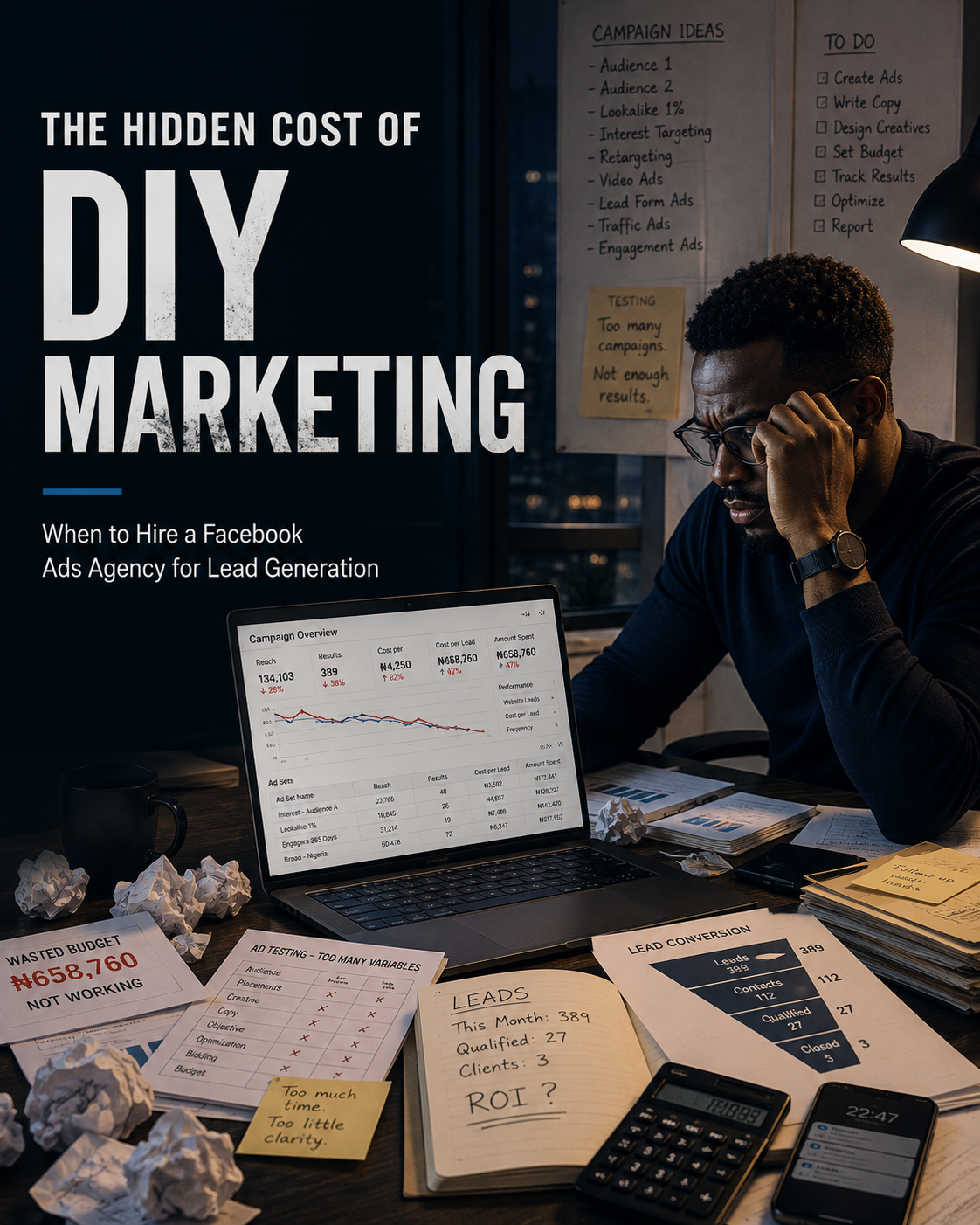

Doing your own marketing can feel like the smart business decision.
You save money. You control everything. You don’t have to explain your business to an outside agency.
But there is a cost that doesn’t always appear on your marketing budget.
Wasted ad spend. Missed leads. Poor targeting. Inconsistent campaigns. And hours of your team’s time spent trying to figure out what isn’t working.
For many growing businesses, the question is no longer whether they can run Facebook ads themselves. The real question is whether doing everything internally is actually helping them grow. At some point, working with a Facebook Ads agency for lead generation can become less about outsourcing a task and more about protecting your marketing investment and creating a predictable path to growth.
DIY Marketing Looks Cheaper Than It Really Is
When a business owner decides to manage Facebook advertising internally, the initial calculation often looks simple.
Why pay an agency when someone on the team can create the campaign?
But advertising isn’t simply about pressing “Boost” or setting up an audience.
Someone has to research the target customer, develop the campaign strategy, create the right messaging, build the audience, test different creatives, monitor performance, analyse results and continuously optimise the campaign.
And every hour spent doing that is an hour that could have been spent running the business.
The cost of DIY marketing isn’t just your advertising budget.
It’s also the time, expertise and opportunities attached to it.
The Biggest Problem Isn’t Spending Money
It’s spending money without knowing why it isn’t working.
A business can spend ₦500,000 on Facebook advertising and generate disappointing results.
The natural reaction might be:
“Facebook ads don’t work for our business.”
But that conclusion could be completely wrong.
The problem could be the audience.
It could be the offer.
It could be the creative.
It could be the landing page.
It could be the campaign objective.
It could be the follow up process.
Or it could simply be that the business hasn’t tested enough variations to understand what actually works.
Successful advertising isn’t about getting everything right the first time.
It’s about learning quickly from the data and improving continuously.
Your Audience Is More Important Than Your Ad
One of the biggest mistakes businesses make with Facebook advertising is focusing too much on the advert itself.
They spend hours creating a beautiful graphic.
They write a clever caption.
They launch the campaign.
Then they wonder why the leads aren’t coming.
But a great advert shown to the wrong person is still a bad campaign.
Effective lead generation starts with understanding:
Who is the customer?
What problem are they trying to solve?
What makes them hesitate?
What would make them take action?
Where are they in the buying journey?
Without this understanding, businesses can end up paying to reach thousands of people who were never likely to become customers.
Your Time Has a Cost Too
Imagine a business owner spending five hours every week trying to understand Facebook Ads Manager.
Five hours might not sound like much.
But that’s roughly 20 hours a month.
That’s 240 hours a year.
What could your business accomplish with an additional 240 hours of focused leadership?
This is where many businesses underestimate the cost of DIY marketing.
They see the agency fee as an expense.
But they don’t calculate the opportunity cost of doing the work themselves.
Your time is a business resource.
And the more your company grows, the more expensive it becomes to spend that resource on tasks outside your core expertise.
When DIY Marketing Starts Holding Your Business Back
Doing your own marketing isn’t automatically a bad idea.
In fact, it can make sense when you’re testing a new offer, learning about your audience or operating with a very small budget.
The problem starts when your business depends on marketing results but doesn’t have the systems or expertise to manage them consistently.
Some warning signs include:
Your campaigns work one month and fail the next
You don’t have a repeatable process for understanding why performance changes.
You are constantly changing your strategy
One week you’re targeting one audience. The next week you’re trying another. Then you completely change the creative.
Without proper testing, you’re collecting activity rather than useful data.
You don’t know your actual cost per lead
If you don’t know how much you’re spending to generate a qualified lead, it becomes difficult to determine whether your advertising is actually profitable.
You are generating leads but not customers
More leads don’t automatically mean more revenue.
If the leads aren’t qualified or the follow up process is weak, your advertising can look successful on the surface while producing little business growth.
Marketing has become another job
If the founder or internal team spends more time managing campaigns than developing the business, it may be time to bring in specialist support.
When Should You Hire an Agency?
The right time to hire an agency isn’t necessarily when your business becomes “big.”
It’s when the cost of figuring everything out yourself becomes greater than the cost of getting experienced help.
A Facebook Ads agency for lead generation can bring strategy, testing, campaign management, audience research and performance optimisation into one system.
Instead of simply asking:
“How do we run Facebook ads?”
You can start asking:
“How do we consistently turn advertising spend into qualified business opportunities?”
That is a much more valuable question.
An Agency Should Do More Than Run Your Ads
This is an important distinction.
If you’re going to work with an agency, don’t look for someone who simply knows how to create Facebook campaigns.
Look for a partner who understands your business.
A strong advertising strategy should connect:
Audience → Offer → Creative → Landing Page → Lead → Follow Up → Customer
If one part of that journey is broken, increasing your advertising budget may simply increase the number of problems you’re creating.
For example, if your advert generates 100 leads but your sales team takes three days to respond, the issue may not be your advertising.
The entire customer acquisition system needs to work together.
Good Marketing Requires Testing
There is rarely one perfect Facebook advert.
Strong campaigns are usually built through testing.
Different headlines.
Different creative concepts.
Different audiences.
Different offers.
Different calls to action.
Different landing pages.
The purpose of testing isn’t to randomly change things.
It’s to discover what your target audience responds to and use those insights to improve future campaigns.
That requires patience, data and consistency.
The Hidden Cost of Getting It Wrong
Consider two businesses.
Business A spends ₦1 million running ads themselves but doesn’t properly track which audiences, creatives or offers are producing qualified leads.
Business B also spends ₦1 million but has a structured campaign strategy, clear tracking, continuous testing and a defined process for converting leads into customers.
They spent the same amount.
But they didn’t necessarily buy the same outcome.
Marketing isn’t about how much you spend. It’s about how intelligently you use what you spend.
Smart Businesses Know When to Bring in Expertise
Successful business leaders don’t try to become experts in everything.
They understand their strengths.
They understand their limitations.
And when a particular function becomes important enough to affect growth, they bring in people who know how to handle it.
You don’t have to personally manage your accounting to understand your company’s finances.
You don’t have to write every contract to understand the importance of legal support.
And you don’t necessarily need to manage every advertising campaign yourself to understand how marketing contributes to revenue.
The goal isn’t to outsource everything.
The goal is to focus your time where it creates the most value.
Marketing Should Support Business Growth
The purpose of Facebook advertising isn’t to generate likes.
It isn’t to make your brand look busy.
And it isn’t simply to increase the number of people who see your content.
The real purpose is to create meaningful business opportunities.
That means generating the right attention, attracting qualified prospects, nurturing those prospects and ultimately turning them into customers.
When marketing is connected to business objectives, advertising becomes more than a promotional activity.
It becomes part of your growth strategy.
So, Is DIY Marketing Still Worth It?
Absolutely, in the right situation.
If you’re learning, testing an idea or working with a limited budget, managing your own campaigns can be valuable.
But as your business grows, the question changes.
You have to ask whether your time is better spent learning the technical details of advertising or leading the business.
You have to ask whether inconsistent campaigns are costing you more than professional support would.
And most importantly, you have to ask whether your current marketing system is capable of supporting the growth you want.
Final Thoughts
DIY marketing can appear cheaper because the agency invoice isn’t sitting in front of you. But the real cost can show up somewhere else: wasted advertising spend, missed opportunities, inconsistent lead generation and valuable leadership time spent solving problems outside your core expertise. Knowing when to bring in a Facebook Ads agency for lead generation isn’t about admitting that you can’t market your business yourself. It’s about recognising when specialist expertise can help you make better decisions, reduce wasted resources and build a more reliable customer acquisition system.
At Bossmeek, we believe marketing should do more than create visibility. It should contribute to business growth.
Because the question isn’t:
“Can we run these ads ourselves?”
The better question is:
“Are we getting enough from our marketing to justify doing it ourselves?”